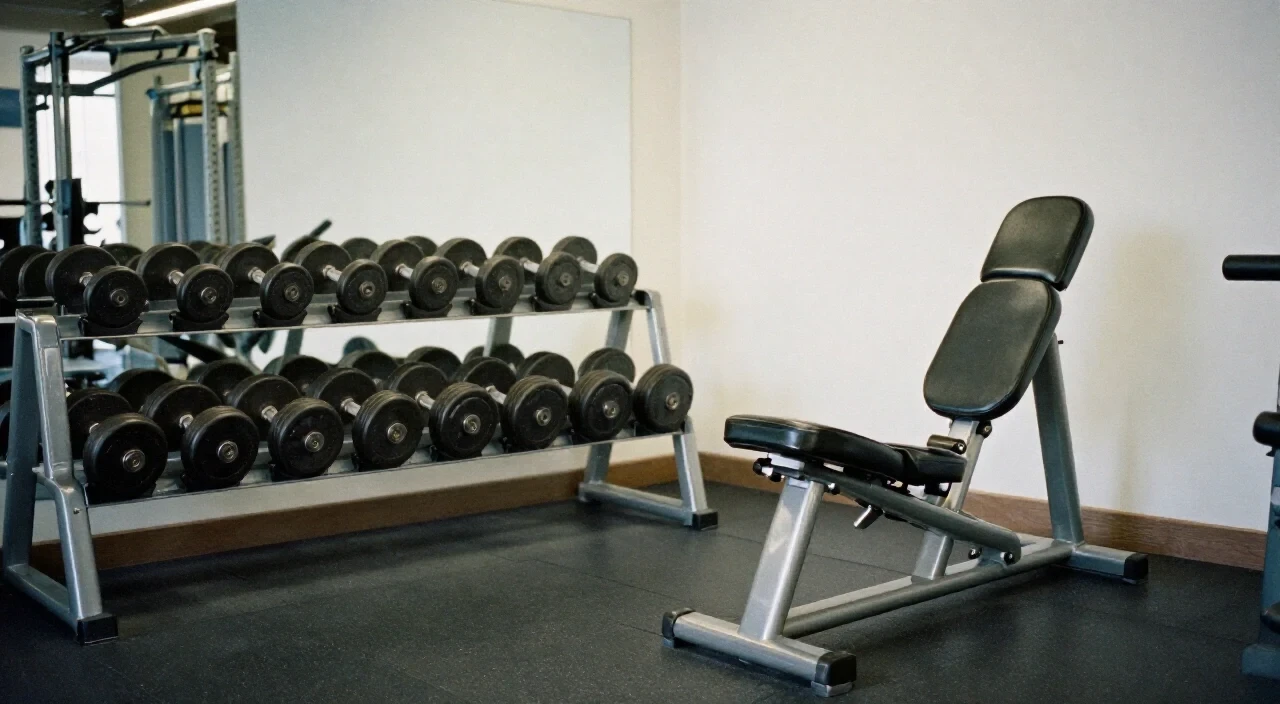
When choosing strength training equipment, both free weights and machines have valid roles; free weights engage stabilisers and improve balance, while machines guide motion and can be safer for beginners. The best choice depends on goals, experience, space, budget, and access to coaching.
Table of Contents
- 01What are the main differences between free weights and machines?
- 02Which type of strength training equipment is safer for beginners?
- 03How do cost, space and maintenance compare for free weights vs machines?
- 04When should I progress from machines to free weights, or combine them?
- 05Frequently asked questions
- 06Sources
- 07Read next
Key takeaways
- Free weights develop stabiliser muscles and balance
- Machines guide movement and aid beginners
- Cost and space differ markedly between the two
- Progression can be mixed, not exclusive
- Match equipment to goals, safety and budget
What are the main differences between free weights and machines?
Free weights require the lifter to control the load through the full range of motion, engaging stabiliser muscles and improving balance. Machines attach the load to a fixed path, isolating target muscles and often allowing heavier loads with less coordination. The choice hinges on movement quality versus load isolation.
Free weights such as dumbbells and barbells let the body move naturally, which means the core, hips and ankles must stabilise each rep. This promotes functional strength useful for daily activities and sports. Machines, by contrast, use pulleys or levers that dictate the trajectory, reducing the need for ancillary muscle recruitment.
Because machines limit the degrees of freedom, they are valuable for targeting specific muscles, especially when correcting imbalances. However, over-reliance can lead to gaps in coordination and joint stability. Free-weight exercises like squats, deadlifts and presses train multiple joints simultaneously, fostering inter-muscular communication.
Choosing the right tool often starts with the exercise goal: isolate a lagging muscle? Use a machine. Want overall power and balance? Reach for free weights. In a club like Halter Strength Club, both options are available, allowing members to blend approaches as they progress.
- Stabilisers: free weights engage them, machines do not.
- Load capacity: machines may allow heavier isolated loads.
- Movement pattern: free weights follow natural paths; machines follow fixed tracks.
Which type of strength training equipment is safer for beginners?
For most beginners, machines are generally safer because the guided path reduces the risk of losing balance or using improper technique. Free weights demand more coordination, which can lead to strain if the lift is performed incorrectly. Supervision and progressive loading are key regardless of equipment.
The NHS recommends starting with 2–3 sets of 8–12 repetitions, focusing on technique before adding load. Machines make it easier to maintain proper form because the equipment stabilises the weight. This is especially helpful for newcomers who may not yet have the core stability required for free-weight lifts.
Even with machines, beginners should avoid loading the bar beyond what they can control for a full rep. A common mistake is “loading for ego” – adding weight to look stronger rather than to train effectively. Incremental increases of 2–5 % per session keep the stimulus safe and progressive.
When transitioning to free weights, start with lighter loads and master the movement pattern under supervision. Using mirrors, video feedback, or a coach at Halter Strength Club can catch form errors early. Gradual progression protects joints and prevents over-use injuries.
- Begin with machines for compound movements like leg press or chest press.
- Incorporate bodyweight exercises to build baseline control.
- Move to free weights once confidence and technique are solid.
How do cost, space and maintenance compare for free weights vs machines?
Free weights usually have a lower purchase price per kilogram and need only a small rack, but you may need multiple plates for progressive loading. Machines cost more, occupy more floor area, and often require regular servicing, yet they can be shared among many users in a club setting.
A basic set of dumbbells and a barbell can fit into a corner of a home gym, requiring as little as 1–2 m² of floor space. Adding a power rack expands the footprint modestly but still remains compact compared with a multi-station machine that can occupy 4–6 m². In Manchester apartments, space constraints often dictate the choice toward free weights.
From a budget perspective, the upfront outlay for a full plate-loaded barbell system may be comparable to a single high-quality leg press, but machines have hidden costs: hydraulic or cable maintenance, occasional part replacement, and professional servicing. Free weights rarely need maintenance beyond occasional grip replacement.
For commercial facilities like Halter Strength Club, the larger investment in machines is justified by the ability to accommodate varied member skill levels simultaneously. For a home user, the flexible, low-maintenance nature of free weights often makes them the more economical option.
- Initial cost: free weights lower per-kg cost; machines higher upfront.
- Floor space: free weights compact; machines require dedicated area.
- Maintenance: minimal for free weights; machines need periodic service.
When should I progress from machines to free weights, or combine them?
A common progression starts with machines to build confidence and basic strength, then gradually introduces free weights for compound movements. Advanced lifters may combine both, using machines for isolation work and free weights for functional strength. The transition timing depends on skill, goals and supervision availability.
The UK guideline of two strength sessions per week can be met with either equipment, but the quality of the stimulus improves as coordination develops. Beginners might spend the first 4–6 weeks mastering the leg press, chest press and lat pull-down before adding a goblet squat or dumbbell press.
Key indicators that a trainee is ready for free weights include: consistent technique on machines, ability to complete 3 sets of 12 reps without excessive fatigue, and a stable core during standing exercises. At this stage, introducing a light barbell for deadlifts or a kettlebell swing adds a functional challenge.
Combining both modalities maximises results. For example, a session could begin with machine-based leg press to pre-fatigue the quadriceps, followed by barbell squats to recruit additional stabilisers. This approach respects the principle of progressive overload while keeping workouts varied.
- Phase 1 (0-6 weeks): machine-focused, 2-3 sets, 8-12 reps.
- Phase 2 (6-12 weeks): add light free-weight basics, maintain machine work for volume.
- Phase 3 (12+ weeks): prioritize free-weight compound lifts, use machines for accessory work.
- Seek coaching at Halter Strength Club when moving to more technical lifts.
Always test the full range of motion before loading a new piece of equipment. If a joint feels restricted or painful, reduce the weight, adjust the seat/lever settings, or switch to an alternative exercise to avoid injury.
Frequently asked questions
Are free weights better than machines for building muscle?
Free weights generally produce greater overall muscle activation because stabiliser muscles are recruited, which can lead to more functional hypertrophy. Machines still build size effectively when used with progressive overload, especially for isolated muscle groups.
Which equipment is safest for injury rehabilitation?
Machines are often preferred in early rehab because the guided path limits stress on healing tissues. As strength returns, clinicians may integrate light free-weight movements to restore joint stability and coordination under supervision.
What strength training equipment works best at home with limited space?
A compact set of adjustable dumbbells, a barbell with a small plate rack, and a foldable bench provide the most versatility. They cover the majority of compound and isolation exercises while occupying minimal floor area.