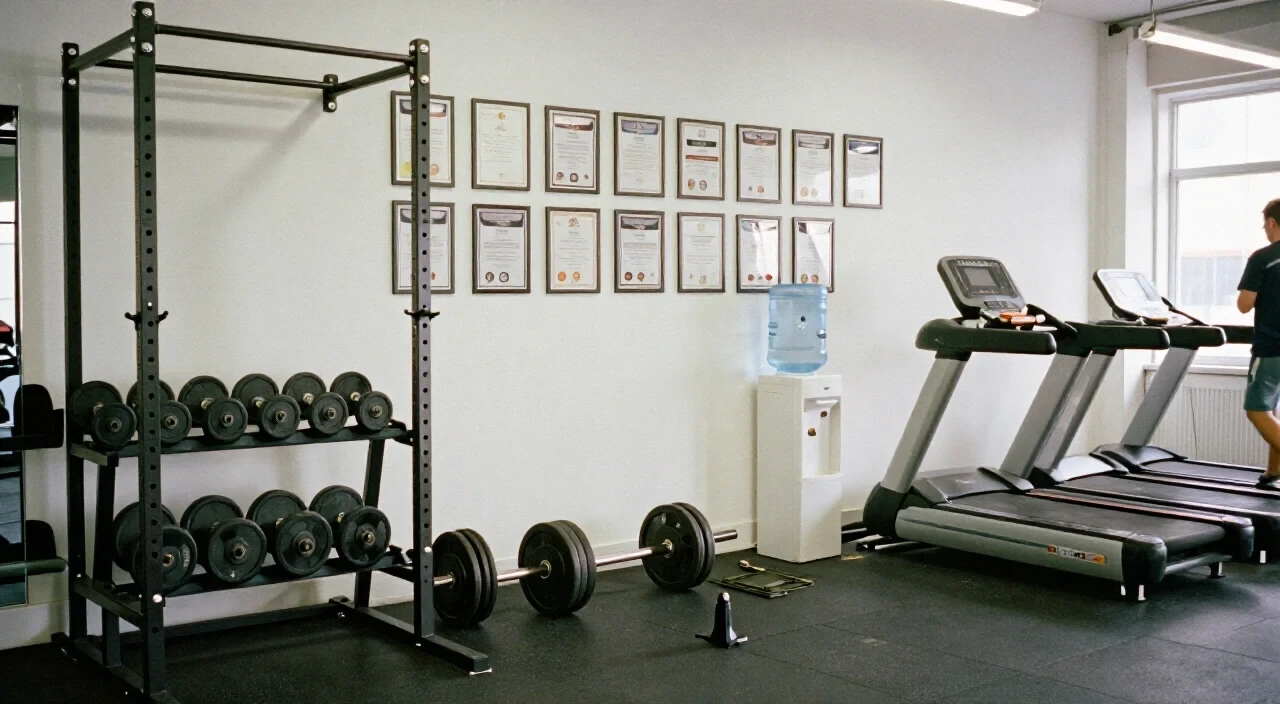
The personal trainer you select should hold a recognised UK qualification, be CIMSPA-registered, carry valid insurance and first-aid certification, and demonstrate proven experience in progressive strength programming. Verify these points, compare session length and price, and discuss your injury history before committing.
Table of Contents
- 01How do I choose the right personal trainer for strength training?
- 02What qualifications should a personal trainer have in the UK?
- 03How much does a personal trainer cost in Manchester?
- 04Is CIMSPA membership necessary for a personal trainer?
- 05Can a personal trainer help with injury rehabilitation?
- 06Frequently asked questions
- 07Sources
- 08Read next
Key takeaways
- Check for a recognised qualification and CIMSPA registration
- Confirm insurance and first-aid certification
- Ask how they programme progressive overload and track lifts
- Compare session length, venue and price before deciding
How do I choose the right personal trainer for strength training?
Choosing the right personal trainer for strength goals means confirming their ability to design progressive overload programmes, monitor fatigue, and adjust loads safely. Look for documented competence, relevant case studies, and a clear plan for measuring lifts over time regularly.
Start by requesting proof of a recognised UK qualification such as Level 3 Personal Trainer or a strength-and-conditioning specific certificate. Ask the trainer to show their CIMSPA Practitioner credential, which proves they have completed assessed competencies. Verify that they hold current public liability insurance and a valid first-aid certification, as most gyms in Manchester require both.
Next, discuss how they would structure your programme. A solid strength coach will outline periodisation phases, specify weekly load increments, and explain how they will test key lifts (e.g., squat, bench press) every 4-6 weeks. They should also describe how fatigue is monitored—through RPE scores, velocity tracking, or simple performance notes.
Finally, arrange a trial session. Observe whether the trainer gives clear cues, watches technique, and adjusts the weight based on your form. After the session, ask for a written summary of the plan and how progress will be recorded. This hands-on test often reveals whether the trainer’s approach matches your expectations.
- Verify qualification and CIMSPA registration
- Confirm insurance and first-aid certification
- Ask for a written strength-program outline
- Check how progress and fatigue will be tracked
- Book a trial to assess coaching style
What qualifications should a personal trainer have in the UK?
In the United Kingdom a personal trainer should hold a recognised Level 3 or higher fitness qualification and, ideally, a CIMSPA Practitioner credential that confirms assessed competence. Additional specialist certificates are needed for rehabilitation or advanced strength coaching.
The most common entry qualifications are awarded by accredited bodies such as REPs, YMCA, or the National Academy of Sports Medicine. These courses cover anatomy, exercise prescription, and client safety. Since October 2026 CIMSPA updated its Practitioner standard, requiring trainers to submit evidence of competency and ongoing CPD from quality-assured education partners.
CIMSPA registration is voluntary but widely regarded as a benchmark of professionalism. It shows the trainer has met a national standard and keeps their knowledge current. For strength-focused clients, look for extra credentials like a Strength and Conditioning (S&C) Certificate, or a Rehabilitation Specialist qualification if you have past injuries.
Remember that UK law does not mandate a statutory licence for personal trainers, so the presence of a CIMSPA credential or a recognised qualification is the primary safeguard. Always ask to see the original certificate and a copy of their CPD log.
- Level 3 Personal Trainer qualification (minimum)
- CIMSPA Practitioner credential (voluntary but recommended)
- Specialist S&C or rehabilitation certificates for niche goals
- Evidence of recent CPD activities
How much does a personal trainer cost in Manchester?
Manchester personal-training rates vary, typically ranging from around £22 to £48 per hour, with session length, venue and trainer experience influencing the final price. Always confirm the exact duration and what is included before comparing quotes.
Local listings show a 60-minute one-to-one session priced at £35, while other providers charge closer to £48 for highly specialised strength coaching. Some gyms bundle sessions with facility access, whereas independent trainers may charge less but expect you to train at a public space or your home.
When budgeting, factor in the frequency you need to achieve progressive overload. For most strength goals, two to three supervised sessions per week are ideal, especially during the initial technique-building phase. Multiply the per-hour rate by the number of sessions to gauge monthly cost, and ask about package discounts for block bookings.
Don’t compare price alone; a cheaper trainer may lack the competence to safely progress heavy loads, while a higher-priced coach might provide detailed programming, regular testing, and professional insurance. Clarify whether the fee includes a written training plan, progress reports, and any additional support (e.g., nutrition advice).
- Typical range: £22 – £48 per hour
- Check session length (45 min vs 60 min)
- Ask what’s included: gym access, programming, testing
- Consider package discounts for multiple weeks
Is CIMSPA membership necessary for a personal trainer?
CIMSPA membership is not a legal requirement, but it signals that a trainer has met a nationally recognised competency standard and maintains ongoing professional development. Many clients treat it as a de-facto quality seal.
The CIMSPA Practitioner credential requires documented evidence of a recognised qualification, completed assessed competencies, and regular CPD. Trainers who hold this credential can demonstrate they understand risk management, client assessment, and safe exercise prescription—key elements for strength training.
Gyms in Manchester often prefer or even require CIMSPA-registered trainers because the body also provides a framework for insurance and first-aid compliance. While an unregistered trainer may still be competent, the lack of a third-party endorsement makes verification more difficult.
If a trainer cannot produce CIMSPA proof, request alternative evidence such as a detailed portfolio of client case studies, references, and proof of current liability insurance. This extra diligence helps ensure safety and professionalism, even without the formal badge.
- Not legally mandatory, but widely respected
- Shows assessed competence and CPD compliance
- Often required by gyms for liability reasons
- Alternative proof: portfolio, references, insurance
Can a personal trainer help with injury rehabilitation?
A personal trainer can assist with injury rehabilitation if they hold specific qualifications or demonstrable experience in that area, but they should never replace a qualified physiotherapist for medical-grade treatment.
First, verify that the trainer possesses a rehabilitation-focused certificate or documented work with clients who have similar injuries. CIMSPA-registered trainers may list such specialisms on their profile. Ask for examples of how they adapted programmes for joint or muscle issues, and whether they collaborate with healthcare professionals.
During sessions, the trainer should prioritize movement quality, use reduced loads, and incorporate mobility or corrective exercises before progressing to heavier lifts. Regularly reassess pain levels and range of motion, and be prepared to modify the plan if symptoms worsen.
Communication is crucial. Disclose any past surgeries, medication, or ongoing physiotherapy. A trainer who respects these boundaries will schedule regular check-ins and may provide progress notes for your physiotherapist, creating a coordinated approach.
- Look for a rehabilitation-specific qualification or proven case studies
- Ensure they work within pain-free ranges and adjust loads
- Share medical history and current therapy details
- Expect collaboration with your physiotherapist
Practical tip: Always ask for a trial session and a written programme outline before signing a contract. This reveals how the trainer tracks progressive overload and whether their communication style matches your expectations.
Frequently asked questions
How often should I train with a personal trainer to build strength?
Aim for two to three supervised sessions per week during the technique-building phase, then maintain one session weekly while you continue independent work. Frequency ensures proper form, progressive overload, and timely adjustments.
What if I have a pre-existing medical condition?
Disclose the condition during the initial consultation and request a trainer with relevant rehabilitation experience. A qualified trainer will adapt exercises, monitor symptoms, and liaise with your healthcare provider as needed.
Do I need to sign a long-term contract?
Not necessarily. Many trainers offer month-to-month packages or block bookings without a lengthy commitment. Test a short trial period first to ensure the coaching style aligns with your strength goals.